Analysis & opinion
Longshine’s Zhou Shijiang on AI-led operations for zero-carbon industrial parks
The November 16, 2026 account presents Zhou Shijiang's approach to coordinating PV, storage, charging and park utilities through Longshine's Jiugong AI energy model. It focuses on sustained operations and cites services to more than 80 Gaozhou businesses; project and platform claims remain those of the account.
As zero-carbon parks move from demonstrations to wider deployment, the real test comes after completion: can a park continue to operate efficiently and economically over the long term?
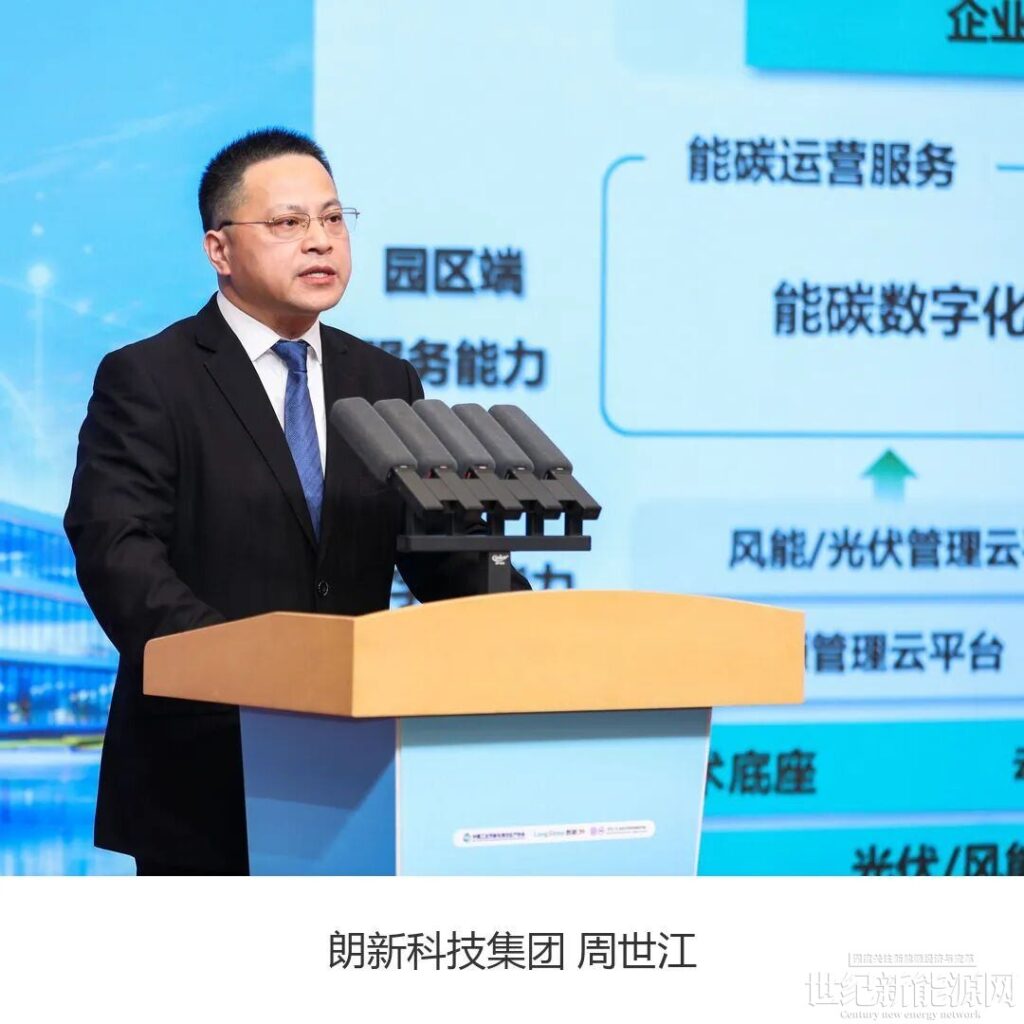
This was precisely the issue addressed by Longshine Technology's Zhou Shijiang in his presentation, ‘AI-driven technological innovation: unlocking a new paradigm for zero-carbon parks’.
Five ‘gaps’, all pointing to the same missing element
Zhou Shijiang broke down the challenges of taking zero-carbon parks from demonstrations to wider deployment into five phrases: an unclear baseline, difficulty absorbing energy, a lack of operations, uncertain returns and weak investment attraction.
On the surface, these are five problems. Behind them is the same systemic gap: data, technology, operations and the business model have not formed a closed loop.
Longshine's solution works on both the technology and business-model sides: it uses the Jiugong large AI energy model to connect a park's ‘planning–construction–operations–services’ into a single chain, supported by five activities—financing, investment, construction, operations and business attraction. These five activities are interlinked, allowing the park to move from being an expenditure to being an asset that can generate returns over the long term.
Zhou Shijiang's assessment is direct: ‘Technology solves the efficiency problem; the model solves the sustainability problem.’
An account that can be calculated clearly, a park that can be operated as a business
Longshine's Jiugong large AI energy model takes in data from energy facilities within the park, such as PV, storage and charging points, and consolidates them into an understandable account: where electricity comes from, how much is used and how much carbon is emitted are all clear at a glance. Carbon changes from a single total in a year-end financial report into detailed data that can be checked and managed every day. Longshine first connects two categories of data to the same system—new-energy facilities such as PV, storage and charging points, and data on the park's existing electricity, heating, cooling, gas and water resources—then uses the Jiugong large AI energy model in between for analysis, forecasting and dispatch.
Electricity can be dispatched in real time, and surplus green electricity can participate in market trading; green electricity, green certificates and carbon assets can also be verified and traded. The park thus changes from a ‘place that uses electricity’ into an entity that can be operated as a business.
Behind this is Longshine's consistent position on zero-carbon parks: a zero-carbon park is not created by construction, but by operations. Only by managing and operating all the park's energy resources—electricity, carbon, certificates, loads, storage and charging—together, so that they work in coordination within one system, can a zero-carbon park have long-term vitality.
Implementation is more persuasive than a concept
Longshine has been deeply involved in national-level zero-carbon parks such as the Sino-German Park in Shenyang and Ganquanpu in Xinjiang, as well as provincial demonstration projects in Gaozhou, Chaozhou, Yangzhou and Suqian. What these projects validate is not just a technical solution, but an operating capability.
Taking Gaozhou as an example, Longshine provides green-electricity support and energy-saving diagnostic services to more than 80 local businesses, integrating dispersed energy islands, charging points and industrial loads into the largest virtual-power-plant dispatch platform in western Guangdong.
The next stage for zero-carbon parks is a competition in operating capability
Whether a park can operate efficiently and economically over the long term depends on whether it can organise dispersed energy resources into a system that can be managed, dispatched and traded. What Longshine is doing is not replicating a demonstration project, but making ‘long-term sustainable operations’ a genuinely replicable business model for zero-carbon parks.