Technology
LONGi receives first-batch certifications for PV module safety and nameplate standards
The two Chinese mandatory standards address electrical and mechanical safety, fire resistance, performance tolerances and traceable module labelling.
At the recent Standards Week event of China's National Technical Committee on Solar Photovoltaic Energy Systems (SAC/TC90) in Yancheng, Jiangsu, LONGi received first-batch certifications under two mandatory national standards: GB 47739-2026, Photovoltaic Module Safety Requirements, and GB 47740-2026, Photovoltaic Module Nameplate Labelling Requirements. It is among the first companies in China to obtain both certifications. The company presents the achievement as evidence of its long-term investment in module quality and reliability, covering product safety and dependable performance parameters.
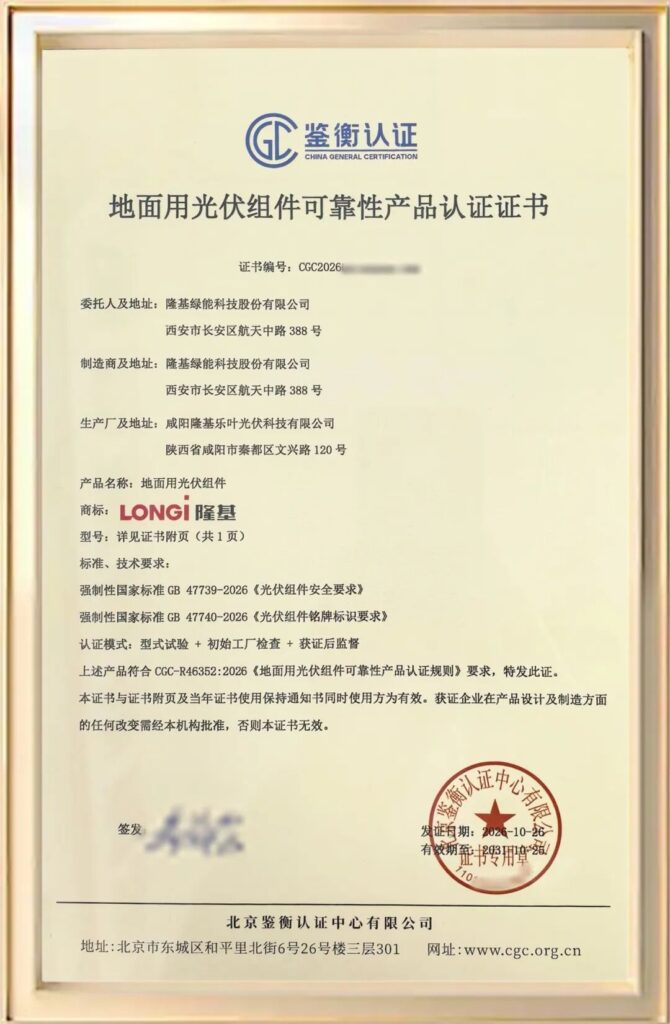
The two standards are among China's first mandatory national standards specifically for PV modules. Their introduction marks the industry's shift from expansion in volume toward higher-quality development. Their demanding requirements establish binding constraints for the PV market and are intended to address persistent quality problems.
GB 47739-2026 sets a broad safety baseline for modules, covering electrical safety, mechanical strength, fire and flame resistance, hot-spot endurance and control of hazardous substances. It addresses safety risks under extreme operating conditions, reducing the potential for power-station fires, electrical leakage and structural failure. The standard provides a safety boundary for long-term plant operation and protection of energy assets.
GB 47740-2026 addresses long-standing problems in module labelling. It specifies nameplate information, tolerances for electrical parameters, measurement traceability and label durability, including limits on differences between nameplate values and measured performance. It aims to prevent overstated power, inflated parameters and inconsistent labelling, making module performance verifiable and data traceable while protecting investors, owners and end users.
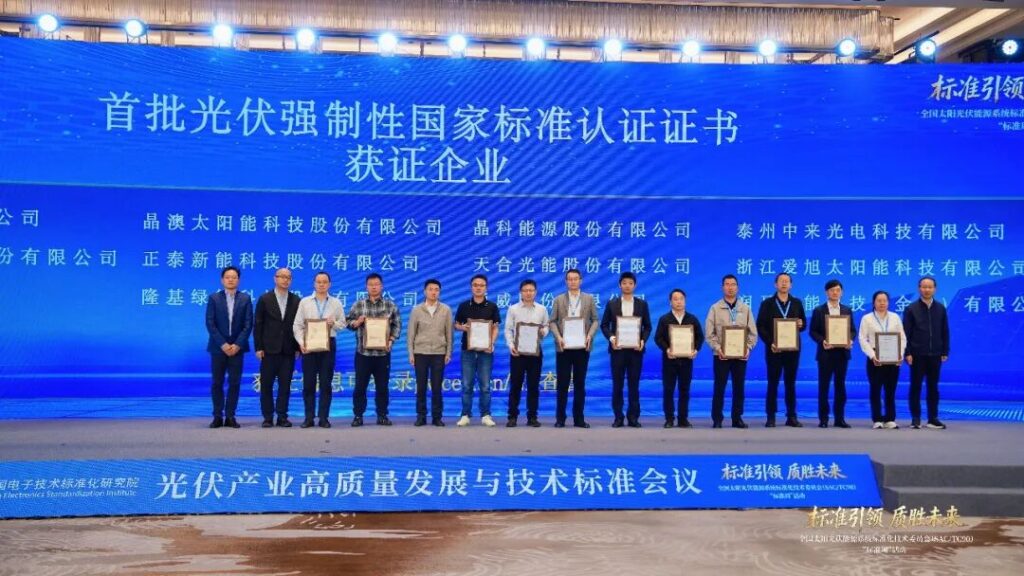
Obtaining first-batch certification under both standards involves more than testing a sample.
The process includes a complete set of demanding type tests, checks on production-line consistency, an assessment of the factory's quality-assurance capabilities and continuing supervision. It examines not just a single sample's performance, but the manufacturer's research and development, process controls, quality system and measurement capabilities across the production chain. The certification therefore assesses the ability to deliver consistently high-quality modules in volume.
LONGi attributes its inclusion in the first group of companies certified under both standards to its long-standing prioritisation of safety and reliability in product development.
From wafers and cells to modules, the company has established a reliability system covering material selection, structural design, simulation, accelerated ageing under extreme conditions and final inspection. It continues extensive testing for demanding environments such as deserts, coastal areas, severe cold and high humidity, using the results to update designs and manufacturing processes.
Its work ranges from Hi-MO module testing for material reliability, resistance to potential-induced degradation, hail and salt mist to participation in discussions that developed the two mandatory standards. LONGi says it seeks to incorporate standards into product definitions and production-line controls, making their requirements routine quality criteria rather than a reactive compliance exercise.
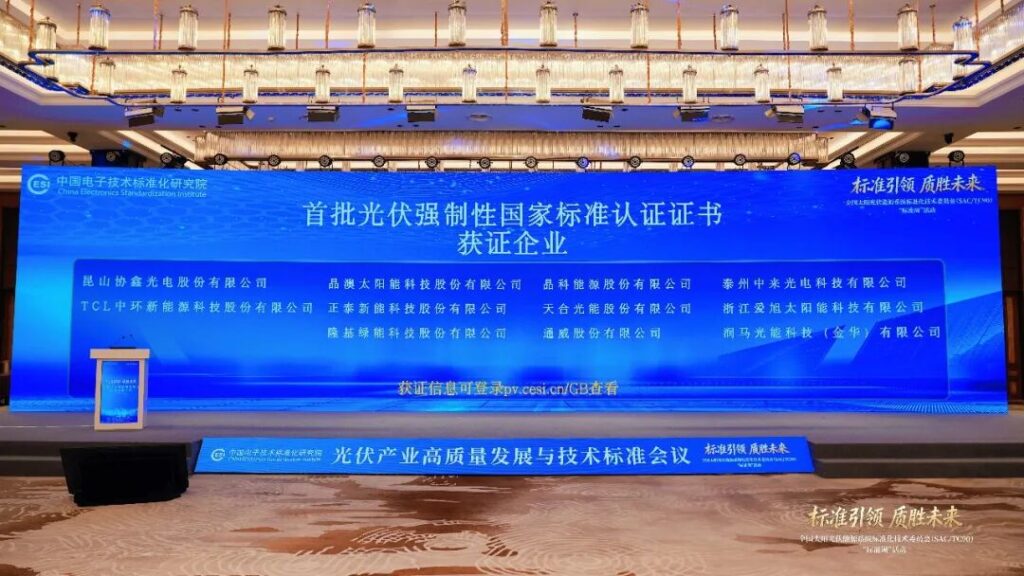
The first-batch certifications recognise product safety and the credibility of stated performance, while also creating an ongoing responsibility. The company describes standards-led quality as the foundation of long-term performance.
LONGi says it will maintain its quality-first, reliability-based product approach and strengthen quality control throughout its supply chain. Its stated aim is to supply standardised, reliable PV products that create stable value for power stations worldwide, support a fair and trustworthy industry and contribute to a sustainable, broadly accessible energy transition.