Company news
Trina Solar and Intel showcase power and storage cabins for AI data centres at CIIE 2026
The joint exhibit presents computing-power coordination, grid-forming storage and an 800 V DC supply solution; the companies began a pilot initiative in Suzhou in September.
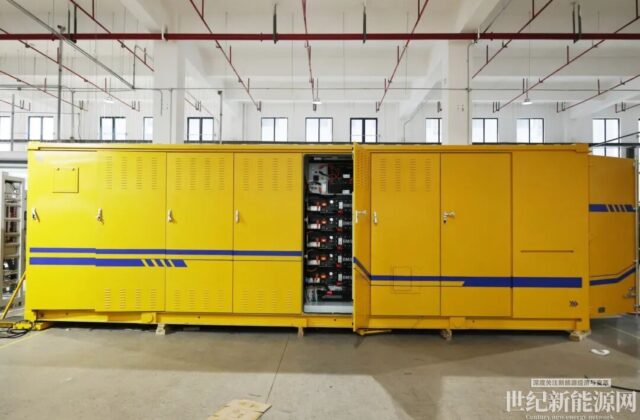
From November 5 to November 10, Trina Solar and Intel are jointly exhibiting energy-storage and power cabins at the ninth China International Import Expo, presenting innovative solutions for AIDC (artificial-intelligence data centre) applications. In the section themed ‘Integrated Storage and Computing, Intelligence towards Green Energy’, they are jointly exploring technical pathways and business models for integrated computing and electricity, bringing new momentum to the development of the green intelligent-computing industry.
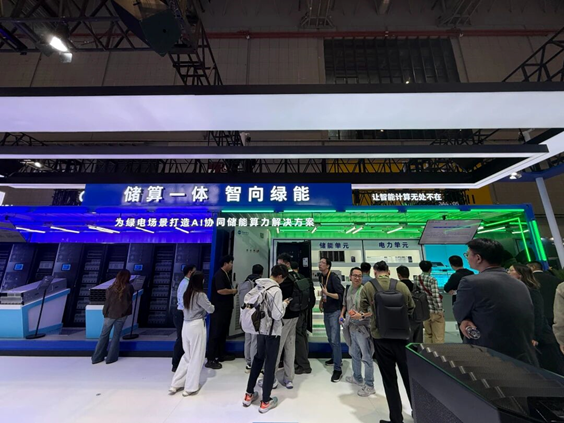
This is the first time the two parties have presented a joint solution at the world's first national-level exhibition themed on imports since jointly launching a ‘computing–electricity coordination pilot project’ in Suzhou this September. This year's CIIE brings together 162 countries, regions and international organisations and 4,142 overseas exhibitors. Its total exhibition area has exceeded 440,000 square metres for the first time, the number of Fortune Global 500 and industry-leading companies has exceeded 300 for the first time, and there are more than 480 representative exhibits making their global, Asian or Chinese debuts, all record highs for the event. On this stage with the highest concentration of ‘hard technology’, Intel's ‘green computing cabin’ is making its CIIE debut; Trina Solar's power cabin, which adds the electricity-side capabilities, has also become one of the most closely watched exhibits at the intersection of AI and energy.
AI computing is pushing electricity demand to a new order of magnitude. The ‘ceiling’ on computing power is becoming a ‘ceiling’ on electricity. The 2026 Government Work Report included ‘computing–electricity coordination’ in new-infrastructure deployment for the first time, while the outline of the 15th Five-Year Plan also explicitly calls for ‘coordinated development of green electricity and computing capacity’. To address the structural mismatch between fluctuating green electricity and computing's need for continuous power, Trina Solar uses AI as its central dispatch mechanism and coordinates scheduling across time and space to dynamically match electricity with computing capacity, promoting a mechanism in which ‘computing follows electricity, and electricity serves computing’, so that green electricity can be converted more efficiently into computing value. On the energy-supply side, Trina Storage's fully integrated solution, with ‘generation, storage and grid-forming as the foundation, and efficient distribution and loads at its core’, improves supply stability and energy efficiency through grid-forming storage, AI dispatch and other technologies. On the power-supply and distribution side, Trina's AIDC 800 V high-voltage direct-current supply solution centres on prefabricated HVDC/SST integrated cabins, providing reliable power support for megawatt-scale, high-density AI racks.
At one end is fluctuating green electricity; at the other are AI loads that fluctuate on a millisecond timescale. Between them, Trina Solar's ‘power cabin’ and Intel's ‘computing cabin’ jointly perform the ‘transcoding’, converting green electricity more efficiently into computing value.
The AIDC solution has already been validated in the Qinghai Sanjiangyuan green-electricity and intelligent-computing integration demonstration project, described as a ‘benchmark project for global high-altitude zero-carbon computing’. A replicable and scalable pathway for computing–electricity coordination has taken shape.
Trina Solar will use CIIE as an opportunity to continue deepening cooperation with Intel and other industry-ecosystem partners, advance technical innovation and applications in computing–electricity coordination, and accelerate the development of end-to-end integrated computing-and-electricity service capabilities, supporting AI computing with more efficient, stable and greener energy solutions. Looking ahead, Trina Solar will seize new industry opportunities, firmly expand from its position as a leader in smart solar, storage and hydrogen energy solutions into comprehensive AIDC solutions, actively develop architecture-defining products such as SST solid-state transformers, and accelerate its transition from a green-energy solutions provider to an architecture definer for integrated green electricity and intelligent computing.