Projects
160 MW / 640 MWh storage connects alongside Ningxia’s 800 MW solar development
The Shizuishan project combines four-hour storage with an AC-side solution comprising 26 converter-transformer units and 103 central PCS units.
On October 15, 2026, the 160 MW / 640 MWh storage facility associated with Ningxia Communications Investment's 800 MW integrated PV development in Shizuishan connected to the grid successfully on its first attempt. It provides four hours of nominal storage duration and can store up to 640,000 kWh per charge. The report describes it as the largest single-station four-hour storage facility in operation alongside an 800 MW-scale PV base in China.
As the AC-side solution provider, Times Tianyuan supplied a project-specific package comprising 26 integrated converter/step-up-transformer units and 103 centralised 1.565 MW storage converters, supporting the storage and later release of solar-generated electricity.
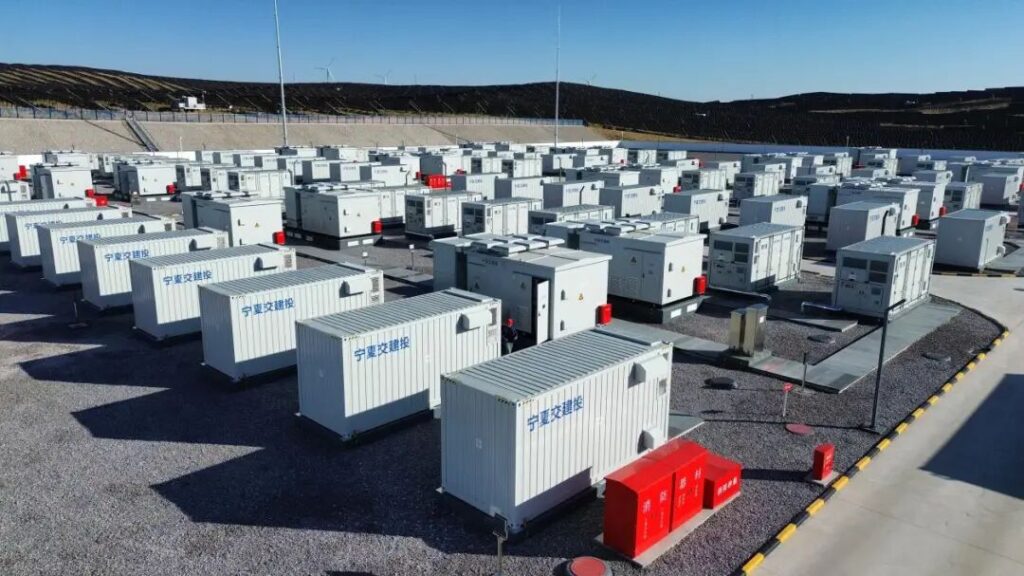
Coordinated technology supports first-attempt grid connection
The report notes that China's renewable-energy development plan for the 15th Five-Year Plan introduces a dependable-output concept for PV stations and states that new centralised wind and solar stations should in principle provide dependable output of at least 10% by 2030. The focus is the power that can be supplied reliably during evening peak demand, when the grid needs it most. Against this background, the report argues that renewable projects are moving from a focus on installed capacity toward reliability, with very large solar-plus-storage developments expected to be an important application.
PV and storage are coupled on the 35 kV medium-voltage side. Storage connects through six 35 kV collector circuits and exports through a 220 kV step-up connection. The 35 kV system brings together thousands of PV inverters, more than a hundred storage converters, static var generators and other power-electronic equipment, alongside passive capacitive and inductive devices. Complex impedance coupling and control interactions place significant demands on system design and converter control performance.
Times Tianyuan's equipment provides regulation intended to support reliable connection, stable power delivery and effective use. Before energisation, its team worked with the project team on commissioning and complete checks. The station was energised successfully on October 15, followed by full-capacity charge/discharge verification, establishing readiness for station operation and demonstrating the equipment and delivery team's performance.
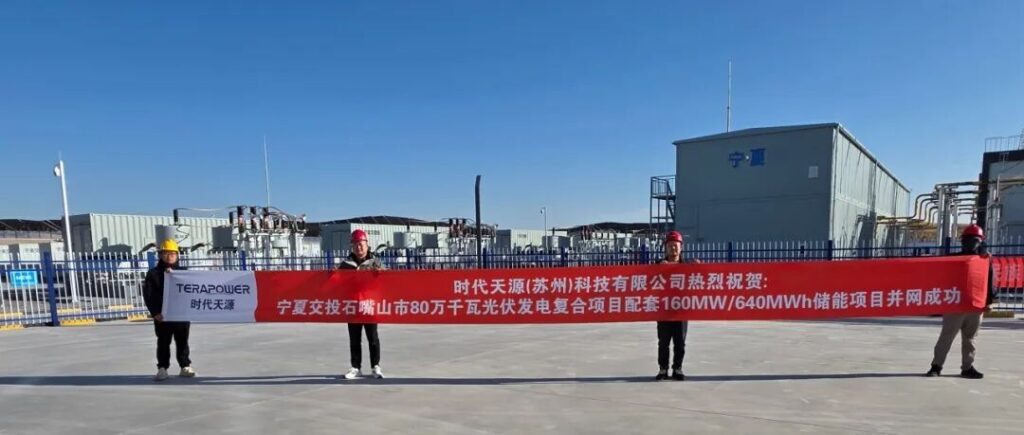
Hundred-megawatt delivery and efficient construction
The 160 MW / 640 MWh station can store 640,000 kWh at one time. Losses during charging and discharging affect the electricity available for use. The AC-side solution addresses two aspects:
Efficient conversion: Times Tianyuan states a maximum efficiency of 99% for its central storage PCS, reducing conversion losses so that more solar-generated electricity can be stored and released.
Coordination across time periods: solar and storage share the 35 kV connection path, supporting four-hour peak shifting. Surplus midday solar generation can be moved to the evening peak, reducing curtailment and supporting renewable integration. The report gives expected annual storage discharge of approximately 170 million kWh.
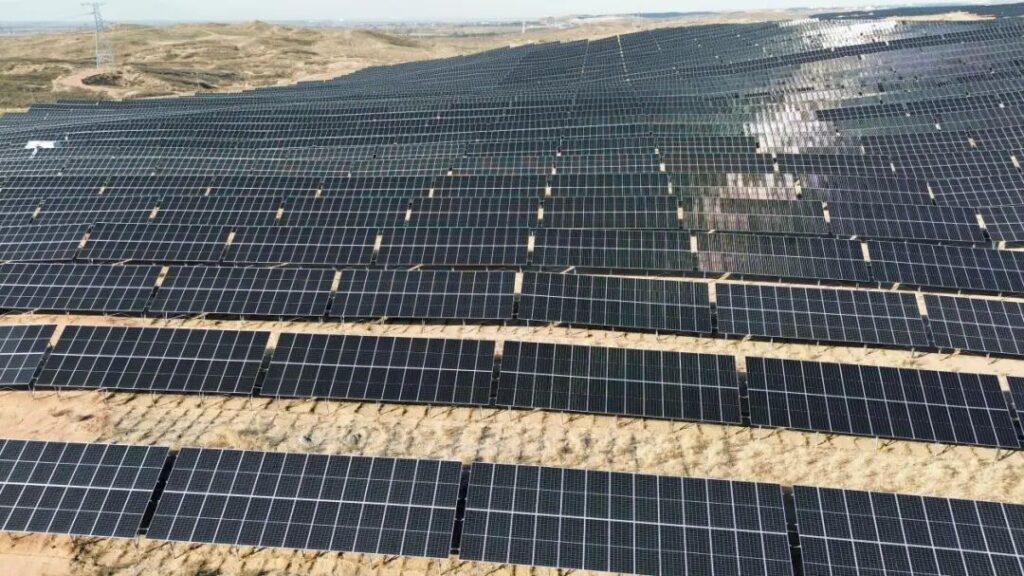
Operation under demanding conditions and long-term availability
For long-term storage operation, stability and availability determine whether the installed capacity remains useful. Times Tianyuan addresses environmental suitability and system redundancy:
Environmental operation: the equipment is described as IP65-rated, with an operating range of -30°C to +60°C, full-power output at 50°C ambient temperature and operation at elevations up to 5,000 m, addressing Gobi dust, wind and day-to-night temperature differences.
Redundancy: a modular redundant design is intended to prevent a single equipment fault from interrupting the whole system and support continued station operation.
Long-term economics: high availability and continuously dispatchable storage capacity are presented as prerequisites for sustaining project returns.
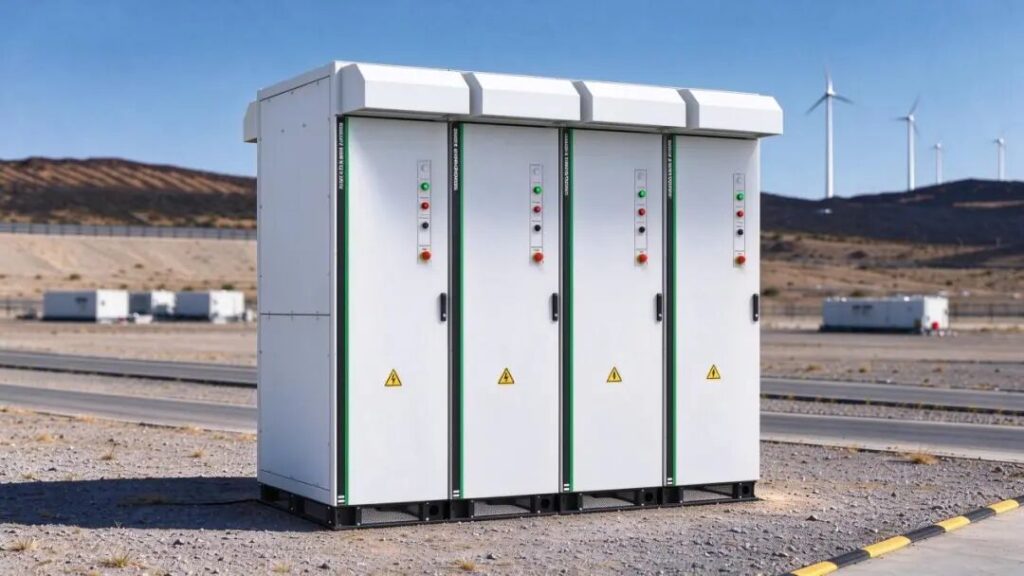
A large-scale application in a Gobi solar-storage cluster
Shizuishan developed around coal. Today, PV, storage and shared-storage projects are gathering in the Gobi landscape around Hongyazi township, forming an integrated generation, storage and consumption cluster. This grid connection is another large-scale application of Times Tianyuan's storage PCS and AC-side integration solution in PV-coupled storage, demonstrating its capabilities in integration, power control, conversion and adaptation to demanding operating conditions.
As large renewable-energy bases develop, both the scale and duration of PV-coupled storage are increasing. The report argues that AC-side technology will affect whether systems connect successfully, operate effectively and remain stable. Times Tianyuan plans to focus on large renewable bases and solar-plus-storage requirements with AC-side solutions intended to support flexible use of renewable electricity and large-scale storage deployment.