Analysis & opinion
Liyang’s Chuangzhi Park microgrid reports over RMB 7.2 million in annual first-phase returns
The operator profile describes 6,200 kW of solar, 2,500 kW of storage and human oversight of AI dispatch, with all photovoltaic electricity consumed locally.
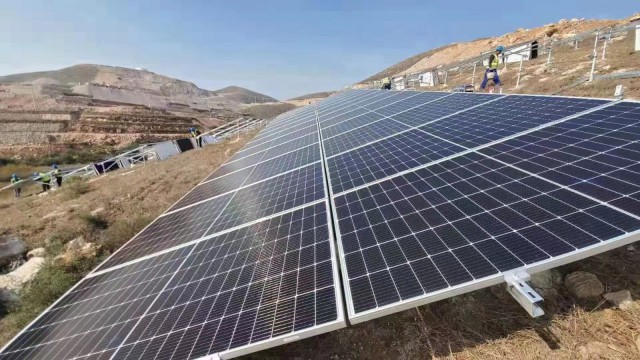
At two in the afternoon, rows of photovoltaic panels gleam in the sunshine at Chuangzhi Park in Liyang, Changzhou, Jiangsu.
Having just inspected the rooftop solar and storage equipment, Zhao Zhen turns and heads into the energy-control room. On the large screen, figures for spot electricity prices, weather forecasts, photovoltaic output and storage capacity change together.
Her eyes scan several windows quickly. With a click of the mouse, she makes a change to the charging and discharging strategy that AI has just generated.
That change is worth money. The park covers 1,500 mu, and 100% of its photovoltaic electricity is consumed locally. After a year of microgrid operation, annual returns from the first phase have exceeded RMB 7.2 million. The figure in the accounts has been accumulated through decisions, corrections and actions like these by Zhao Zhen and her team.
This September, ‘microgrid administrator’ was officially included in China's eighth batch of new occupations. Zhao Zhen is a front-line practitioner of this new occupation.
Why does the park have a new ‘manager’?
A few years ago, Zhao Zhen's work involved more time out on site, investigating potential equipment hazards. Now she has to inspect equipment conditions on rooftops as well as stay in front of the large screen, closely watching changes in electricity prices, sunlight and storage.
The change comes from the park itself.
Chuangzhi Park is a typical office-oriented park, but alongside its nine-to-five load, an industrial laboratory needs a continuous electricity supply around the clock. Businesses had installed their own photovoltaic systems with separate connections; surplus electricity could not be stored, the peak-to-valley differential was relatively large and electricity costs remained high. The park's average electricity cost was as high as RMB 0.85 per kWh, whereas businesses with the same scale of electricity consumption needed only RMB 0.75.
‘Businesses want cheap green electricity and reliable supply, but no single business can solve this on its own,’ Zhao Zhen says.
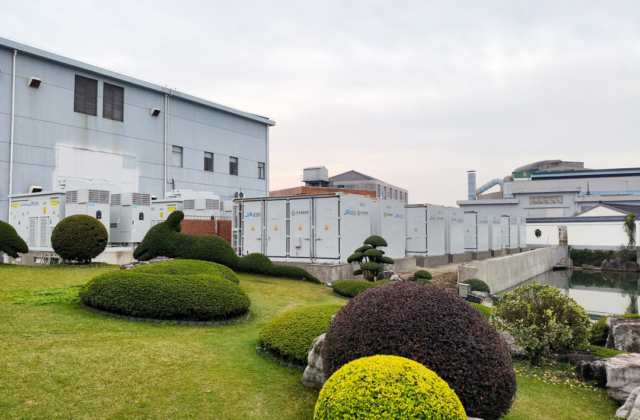
State Grid Liyang Power Supply Company designed a customised intelligent-microgrid construction plan for Chuangzhi Park. Led by the management committee, it consolidated all rooftop resources on factory buildings, corridors and carports, centrally building 6,200 kW of photovoltaics across the park, together with a 2,500 kW storage station and an intelligent energy-management system, creating a model microgrid that integrates generation, grid, loads and storage.
With all the hardware in place, a new role came to the fore: a microgrid administrator who understands data, markets and operation and maintenance.
If AI can dispatch automatically, why are people still indispensable?
The system's ‘brain’ accesses six categories of data: weather, grid, loads, storage, carbon emissions and the electricity market. AI updates charging and discharging strategies on a rolling basis every 15 minutes and can also receive spot-price forecasts for the next four hours. Chuangzhi Park has consequently become Jiangsu's first park microgrid to participate in electricity spot-market regulation.
However fast it calculates, there are still questions it cannot answer.
How much photovoltaic electricity is being generated right now, and who should use it first? Should storage charge now, or wait to discharge during the evening peak? If a problem occurs on the main grid, can the park support itself? If the power really goes out, what is the first step in restarting the system?
In documents, these are technical terms: monitoring, forecasting, strategy formulation, switching between grid-connected and islanded operation, black start, fault handling and performance assessment. For Zhao Zhen, they are a series of decisions that must be made on the spot.
‘AI is good at standardised calculations, but real operating conditions are constantly changing. When factories rush to fulfil orders, loads can surge instantly; electricity prices fluctuate continually, and we need to intervene manually to adjust strategies. My work is not to follow AI passively, but to steer it,’ Zhao Zhen says.
Safety, cost and green-electricity consumption are three goals that often pull in different directions. Which loads can be adjusted, when to switch operating modes and how much storage reserve to retain: the microgrid administrator must take responsibility for operating results.
The sunshine accounts are also accounts of retaining people
After a year of microgrid operation, annual returns from the first phase have exceeded RMB 7.2 million, and the equivalent cost per kWh has fallen by RMB 0.21.
Ye Dongping, general manager of Changzhou Jingli Optical Technology Co., Ltd., has made a simple calculation: ‘The park gives us a discount of RMB 0.05 per kWh. With more than 180,000 kWh over nine months, that comes to nearly RMB 10,000, equivalent to one month's wages for two employees.’
Besides reducing costs and improving efficiency, the photovoltaic electricity is 100% consumed locally. The first phase reduces carbon emissions by 16,800 tonnes a year; after the second phase enters operation, annual carbon reductions will increase by approximately another 20,000 tonnes. Rooftop sunshine has genuinely become a carbon-reduction achievement.
Almost all the microgrid's ‘internal organs’ are locally manufactured: lithium-ion storage cells from Jiangsu Contemporary Amperex Technology, transformers from Huapeng Group and transmission cables from Shangshang Cable. Ninety-five per cent of the park's electrical equipment was purchased locally in Liyang.
Locally made batteries have become the park's ‘energy warehouse’, while the low-cost green electricity supplied by the microgrid supports stable production at lithium-battery businesses in return. Industry, energy and talent form a closed loop here.
‘Some of the young people in the factories originally wanted to leave but later stayed,’ Zhao Zhen says. ‘My job is to make this industrial area run more steadily and in a greener way. Now that this model has proved workable, I hope it can be replicated in more industrial parks in the future.’
Energy supports industry, and industry keeps people here. Liyang's ‘sunshine accounts’ are becoming increasingly clear.