Analysis & opinion
INVT’s Zong Pei on industrial technology, integrated solar-storage solutions and lifecycle value
INVT’s Zong Pei discusses power electronics, PV and storage inverters, batteries and integrated systems for residential, commercial and mining-microgrid applications at SNEC.
As solar and storage move towards higher-quality development and more intense competition, INVT is drawing on its industrial-automation experience, technology, application coverage and global services to develop its position in the sector.
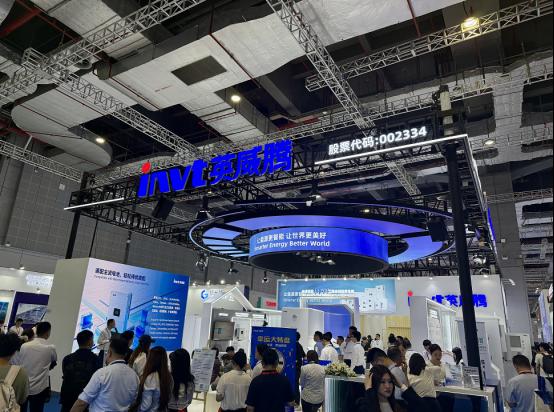
Based on more than two decades of industrial power-electronics experience, INVT's solar-storage business has expanded from core components to integrated systems. During SNEC, business-group President Zong Pei spoke in an interview with International Energy Net about the company's development, products, competitive positioning and views on market cycles.
1. Industrial technology and the solar-storage value chain
Zong said INVT was founded in 2002 and, by the reporting year, had 24 years of experience in industrial automation and power electronics. Its work in variable-frequency drives, servo drives and industrial-control systems has built technical and service capabilities that underpin the solar-storage business.
INVT applies industrial power electronics, control algorithms and reliability-oriented design to PV and storage. Zong highlighted intelligent manufacturing, research and testing platforms and standardised quality management. He said the company has maintained annual research-and-development investment above 10% while iterating products for reliability, cost effectiveness and competitiveness.
Starting with PV inverters, the company expanded into storage converters, batteries and integrated systems. Zong described a progression from components to integrated systems, standard products to customised solutions and domestic operations to a global presence.
2. Four products targeting application requirements
At SNEC, INVT introduced four products for residential, commercial, light-commercial and mining-microgrid applications. Zong explained their intended technical and application benefits.
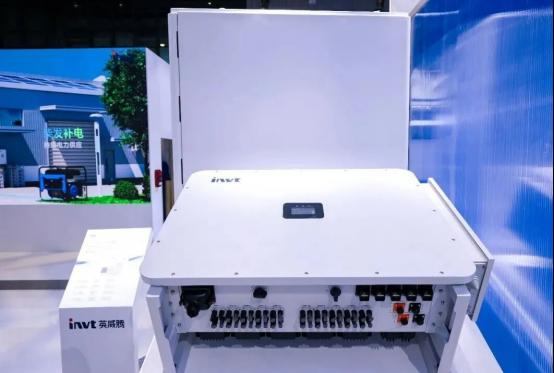
The 150 kW hybrid inverter targets medium and large commercial sites. INVT specifies ten MPPTs and 46 A input capability for high-power modules, with a claimed generation increase above 3%. It supports millisecond grid/island transitions for critical factory and park loads. L4 AFCI arc protection and startup self-testing are standard. Software-defined interfaces, dual battery ports and an embedded EMS support staged expansion, investment and detailed dispatch. The company describes compatibility with mainstream batteries and applications including parks, factories and data centres.
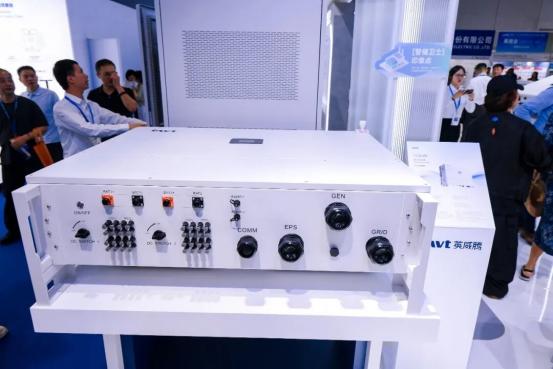
The 132 kW / 225 kWh solar-storage system targets demand fluctuations, safety and maintenance at commercial parks, medical and educational buildings and small mining microgrids. INVT highlights seven protection layers, a lightweight pack design and EMS strategies that respond to prices and loads. Intended functions include electricity savings, emissions reductions, backup and off-grid operation.
The new 3–6 kW residential inverter range combines a compact enclosure with millisecond grid/island transitions and 1.5 times peak off-grid output. INVT specifies L4 AFCI, IP66 protection and Type II AC/DC surge protection. Dual MPPTs and support for a twofold DC oversizing ratio are intended to improve PV utilisation. The company describes compatibility with multiple battery types and an app for remote monitoring, maintenance and fault warnings.
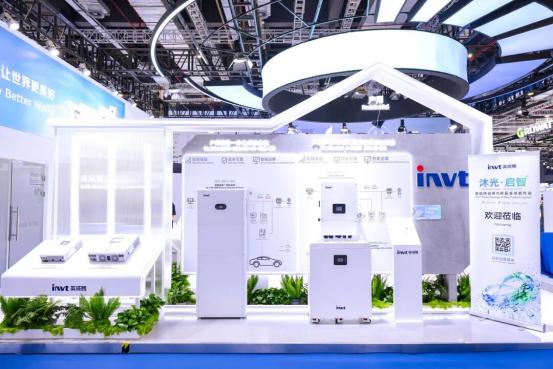
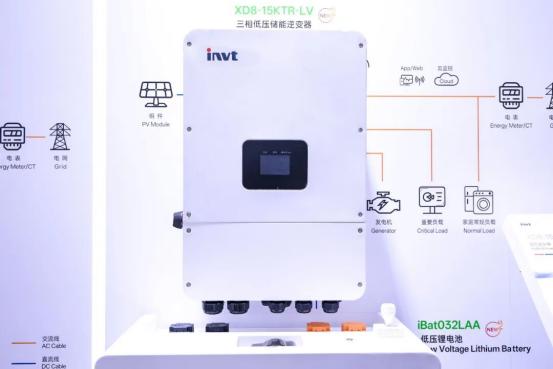
For higher-end homes and small commercial sites, the XD8–15KTR-LV three-phase low-voltage storage inverter uses a low-voltage architecture that INVT says can reduce initial supporting-equipment investment by 30%. Specifications include 20 A inputs, a twofold PV oversizing ratio, 160% peak output and a 10 ms transition. It supports weak-grid applications and parallel units, with IP66 protection and operation from −30°C to 60°C. INVT also highlights battery compatibility, peak shaving and load dispatch.
Zong argued that competition has moved beyond isolated equipment parameters towards renewable-energy utilisation and value. He described coordinated solar-storage systems, efficient consumption and lifecycle returns as central, with application-specific solutions intended to create long-term customer value.
3. Five capabilities and a long-term partner strategy
Zong summarised INVT's positioning through five capabilities: a shared industrial-technology base, specialist teams, application coverage, global service and open cooperation.
He said 24 years of automation and power-electronics experience informs control algorithms, reliability-oriented design and safety systems. The company has assembled specialists across software, hardware, testing, quality and marketing to support development and project delivery.
INVT's portfolio covers homes, commercial sites, large storage and mining microgrids. Zong said its service network spans more than 120 countries and regions, combining local operations, delivery, responses and maintenance.
He also emphasised an open cooperation model intended to help partners develop their own brands. INVT provides flexible arrangements backed by its technology, manufacturing, quality systems and teams. Zong described the combination of manufacturing capability and broad partner support as a differentiator.
The company's stated positioning is to provide intelligent solar-storage solutions across applications. It focuses on industrial-grade quality, integrated systems and long-term value, seeking to act as a reliable energy partner.
4. Digital maintenance and lifecycle returns
Maintenance is a key part of project lifecycle management and customer returns. INVT aims to address slow responses, complex communication, difficult diagnosis and prolonged downtime through a simplified digital-maintenance approach.
Zong described a scan-to-report function: site workers scan an equipment QR code to retrieve its records and report faults using voice or photographs. The objective is quick reporting and precise identification without lengthy exchanges.
Fault assessment combines an AI system with expert review. Operating data supports initial analysis, while experienced specialists examine root causes to avoid unfocused troubleshooting. The stated aim is to shorten downtime and limit lost generation and storage revenue.
INVT reports positive customer feedback from residential and commercial users. Zong presents the maintenance system as a move from reactive repairs towards prediction, monitoring and more predictable support.
5. Market cycles and quality-oriented competition
Discussing price competition and industry cycles, Zong said short-term low-price competition does not change the sector's long-term direction. He expects a transition from rapid expansion towards competition centred on technology, quality, service and complete solutions.
He said INVT intends to remain pragmatic and long-term oriented rather than join low-end price competition, maintaining product and service standards and supporting partners throughout the lifecycle. He linked the company's success to that of its customers.
Zong argued that strong technology, product quality, service and long-term reliability would help companies navigate industry cycles. INVT plans continued product and solution development focused on customer value and the energy transition.