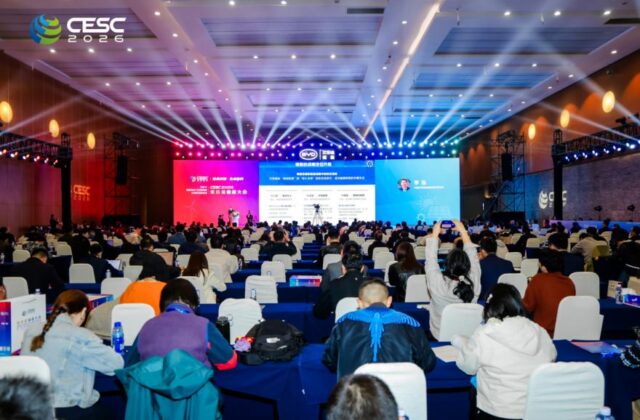
CESC2026 in Nanjing examines storage performance, grid support and project economics
Conference sessions connect battery and grid-forming research with industrial applications, overseas delivery, operational economics and on-site technology testing.
Flow batteries, sodium-ion developments, liquid air, compressed air, thermal and other storage routes.
Conference sessions connect battery and grid-forming research with industrial applications, overseas delivery, operational economics and on-site technology testing.
The Golmud demonstration uses cryogenic air liquefaction and domestically supplied turbines, heat exchangers and compressor-drive equipment.
The Xinjiang CSP installation works with 900 MW of PV, using thermal storage to extend generation beyond solar-production hours.
Storage technologies use different energy media, conversion chains and operating constraints. Batteries, liquid air, compressed air, thermal systems, flywheels and pumped storage should not be forced into one battery specification table.
Compare discharge duration and power with the relevant energy boundary, efficiency, auxiliary requirements, site needs and development stage. Prototype results and a commissioned commercial project provide different levels of evidence.
Long-duration research should explain why a technology suits a particular service rather than ranking all technologies by one metric. Reported scale or performance claims remain attributed to their source and project context.