Company news
Tongwei reports perovskite-HJT tandem progress on its 5 MW pilot line
At a materials conference reported on November 12, 2026, Tongwei presented tandem-cell and module results through October 2026. The 5 MW facility remains a trial line; conversion to hundred-megawatt-scale capacity is a future aim, not an established commercial rollout.
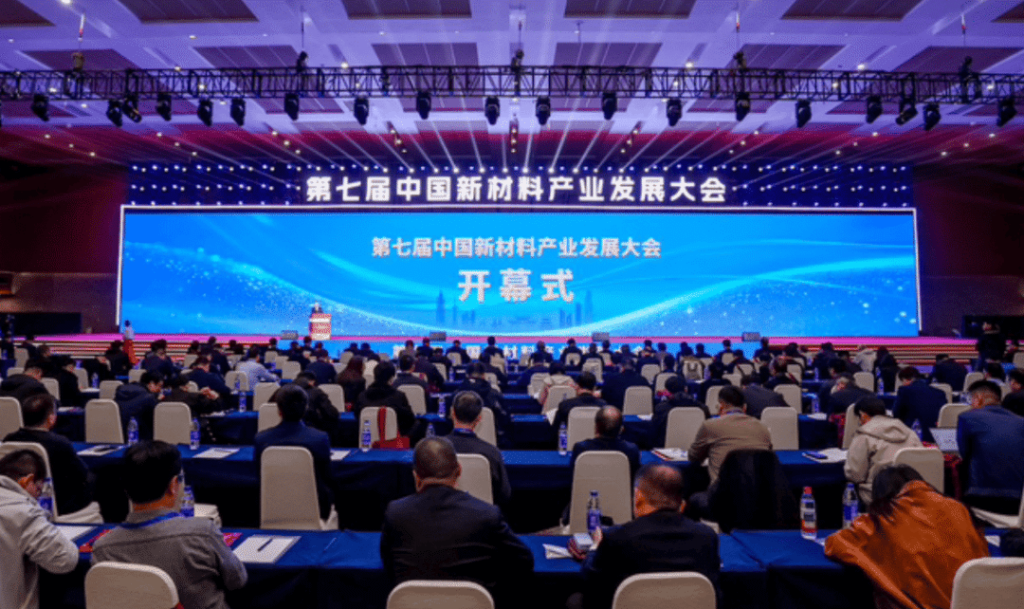
Recently, the seventh China New Materials Industry Development Conference was held at the Nanjing International Expo Center. Under the theme ‘A Strong Nation in Materials, a New-Quality Future’, the conference held in-depth discussions across seven major areas, including key energy materials. Dr Hu Yuchao, a lead R&D engineer at Tongwei's Photovoltaic Technology Center, was invited to attend and deliver a presentation entitled ‘Key Technologies for Commercially Compatible Perovskite/Heterojunction Tandem Cells and Megawatt-Scale Mass-Production Practice’, systematically presenting Tongwei's engineering work on third-generation photovoltaic materials and mass-production processes. At the conference, the organising committee recommended the presentation as a new-materials enterprise technological-innovation report in recognition of its outstanding technological innovation and industrialisation value.
Perovskite–crystalline-silicon tandem technology has moved from ‘laboratory efficiency breakthroughs’ into the challenging stage of ‘commercial manufacturability’. Building on its heterojunction industrial base, Tongwei has chosen a ‘vapour deposition + solution two-step’ route compatible with existing production lines, addressing film formation, nucleation and crystallisation as separate processes. It has achieved perovskite films on textured silicon surfaces with no edge effects and non-uniformity below 1%, resolving the most difficult consistency and reproducibility problems in large-area preparation.
In megawatt-scale practice, Tongwei completed the full-line integration of a 5 MW fully automated tandem trial line in September 2025, establishing a complete R&D chain from ‘laboratory to pilot line to outdoor validation’. As of October 2026, its full-area 210 half-cell perovskite–heterojunction tandem cells had exceeded 33.09% efficiency, while the trial line's daily average efficiency was consistently above 30%; its 210-66-format tandem modules reached 813 W. Through substitution with domestically produced materials and a recycling system, material costs on the trial line have fallen by 60% compared with the initial stage after its construction. The 0BB + silver-coated-copper ultra-low-temperature metallisation technology further reduces the use of paste and encapsulation film, giving tandem technology a real basis for competing on cost.
Reliability was emphasised as the ‘make-or-break requirement for commercialisation’. Tongwei has built systematic protection from the bulk material to the interfaces: a dense passivation layer suppresses halide migration, consistent crystallisation orientation relieves lattice stress, and highly dispersed SAM improves ultraviolet resistance. To address UV degradation, it has also developed a dual barrier combining ‘light conversion + cut-off’ and a repairable mechanism. Devices have now exceeded a T90 of 1,000 hours in full-spectrum MPPT testing at 85°C, while outdoor validation is being advanced in Jiuquan, Gansu, and across multiple climatic regions.
Looking ahead, Tongwei will build an AI high-throughput experimental platform to accelerate iteration of cation formulations, interface materials and stability mechanisms, and will develop customised modules for multiple applications including curved vehicle-mounted photovoltaics, space photovoltaics, distributed systems and ground-mounted power plants. Tongwei will continue to follow the pragmatic principle that ‘mass-production feasibility takes priority over absolute efficiency’, advancing perovskite tandems from technological reserves towards conversion into hundred-megawatt-scale capacity and providing a Tongwei example for China to retain the technological initiative in next-generation photovoltaic materials.